A paleo shop looks strange the first time you do it. You spend almost the whole trip around the edge of the store — the fresh aisles, the butcher's counter, the fish counter, the freezer — and walk past most of the middle. Once you know what you are buying, it takes less time than your old shop, not more.
This is a working list rather than an exhaustive one: enough to feed one person well for a week, in quantities you can actually buy in a UK supermarket.
The fresh aisles
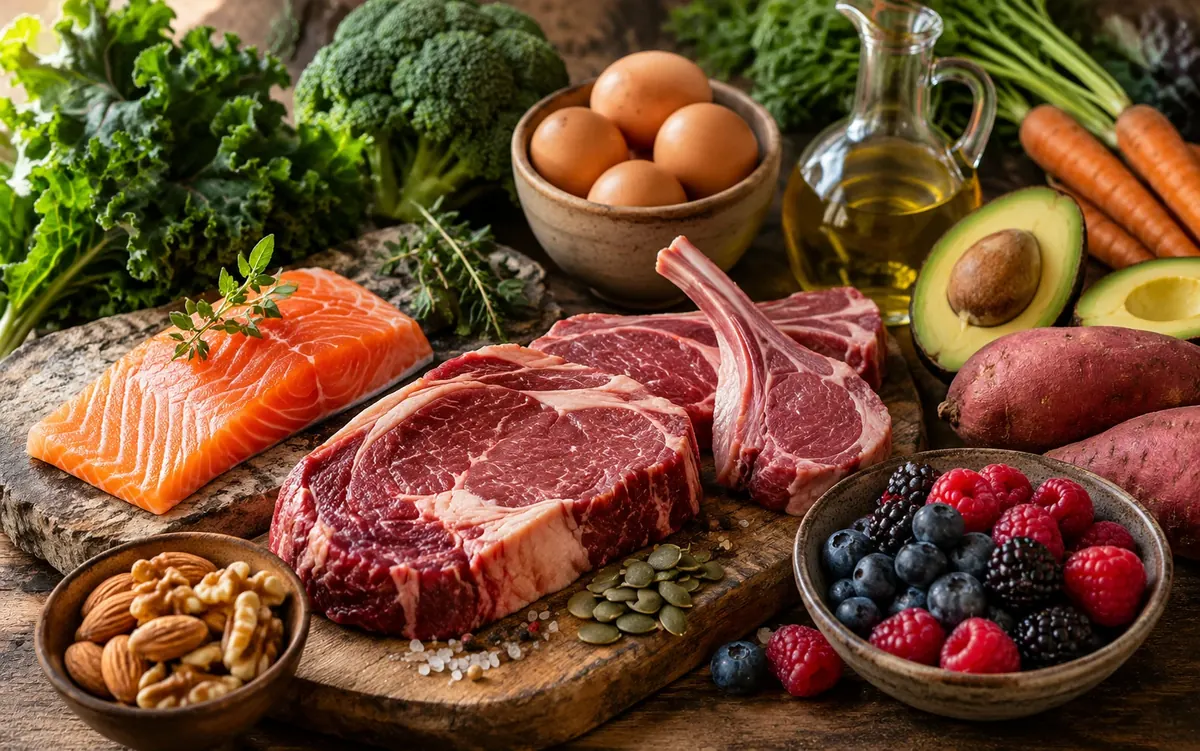
Vegetables (buy the most of these)
- Spinach or mixed leaves — two bags
- Broccoli and cauliflower — one each
- Carrots, onions and garlic — the basics for almost everything
- Courgettes, peppers and mushrooms
- Sweet potatoes or squash, if you are training
- A bag of frozen mixed vegetables for the nights you cannot face chopping
Fruit
- Frozen berries — cheaper than fresh and just as good
- Apples, lemons and whatever is in season
- Two or three avocados at different ripeness
The meat and fish counters
- Chicken thighs, bone in and skin on — more flavour and less money than breast
- A braising cut: beef shin, lamb shoulder or pork shoulder for a slow cook
- Steak or pork chops for a quick dinner
- Mince — beef, lamb or turkey
- Salmon or mackerel fillets
- Liver, if you will eat it. It is one of the cheapest nutrient-dense foods in the shop.
- A dozen eggs — probably two
Tins, jars and the store cupboard
- Tinned sardines, mackerel or salmon in olive oil or water
- Tinned tomatoes — plain, no added sugar
- Olive oil for dressing, coconut oil or beef dripping for frying
- Vinegar and mustard with no added sugar
- Olives
- Dried herbs, smoked paprika, cumin, chilli flakes, black pepper, decent salt
- Almonds, walnuts and pumpkin seeds
- Nut butter with one ingredient on the label
- Coconut milk — full fat
- Stock or bones for stock
What to walk past
The bakery, the cereal aisle, the pasta and rice aisle, the biscuit aisle, the fizzy drinks and most of the chilled ready meals. Also two things that catch people out: flavoured nuts, which are usually roasted in sunflower oil and coated in sugar, and “healthy” bars and granolas, which are confectionery with better marketing.
Reading UK labels quickly
Three habits will sort almost everything:
- Count the ingredients. One or two is ideal. More than five usually means it is not a paleo food.
- Look for the oils. Sunflower, rapeseed, soya and “vegetable oil” are in far more products than you would expect, including tinned fish and pre-cut salads.
- Check for hidden sugar. Dextrose, glucose syrup, maltodextrin, fruit juice concentrate and invert sugar are all sugar. UK labels list sugars per 100g — anything in double figures in a savoury product is worth a second look.
Keeping the cost down
Meat and fish are the expensive part, so this is where the savings are:
- Buy the cheap cuts and cook them slowly. Shin, shoulder and thigh beat fillet on flavour.
- Tinned sardines and mackerel are among the cheapest oily fish available.
- Frozen fish, berries and vegetables are typically cheaper than fresh with no real loss.
- Eggs are still the cheapest complete protein in the shop.
- Buy nuts in large bags rather than snack packets.
- Cook double and use the leftovers for lunch. It removes a shop and a meal decision at once.
A worked example: one week, roughly
A dozen eggs, two packs of chicken thighs, a shoulder joint, a pack of mince, two salmon fillets, four tins of sardines, five or six vegetables, two bags of leaves, frozen berries, a bag of almonds, olive oil, coconut milk, tinned tomatoes and a handful of spices. That is roughly seven breakfasts, seven lunches and seven dinners, with the slow-cooked joint covering two or three meals on its own.
Make it automatic
A list only works for the first week or two; after that you want a plan that tells you what to cook. Our paleo meal plan guides pair every recipe with the shopping list it needs, so the weekly shop becomes a five-minute job. If you are not started yet, read the beginner's first week first, and the full paleo food list if you are still unsure what is in and what is out.
Frequently asked questions
What should be on a paleo shopping list?
Vegetables and leaves, frozen berries and fresh fruit, eggs, chicken thighs, a braising cut of beef, lamb or pork, mince, oily fish, tinned sardines or mackerel, tinned tomatoes, olive and coconut oil, nuts, seeds, coconut milk, and a good range of herbs and spices.
Is the paleo diet expensive in the UK?
It does not have to be. Cheap braising cuts, chicken thighs, eggs, tinned sardines and frozen fruit and vegetables keep the cost down, and cooking double so that dinner covers the next day's lunch removes both a shop and a meal decision.
How do I spot non-paleo ingredients on UK labels?
Count the ingredients — one or two is ideal. Look for sunflower, rapeseed, soya or “vegetable” oil, which appear in more products than you would expect, and for hidden sugars listed as dextrose, glucose syrup, maltodextrin, fruit juice concentrate or invert sugar.

PaleoDiet.co.ukWe are passionate about helping people learn about the Paleo Diet and improving their health. This article is for information only and is not medical advice — see our disclaimer.